Bailey Laurie, Cody Angove and St Kilda's kids: AFL Round 23 2026's best rising players
The best game in this week's crop of newest players wasn't a forward's bag or a midfielder's ball-count — it was a half-back's number that would have held its own against the 300-gamers.
The read
Everyone's eye goes to the same two places when the newest players get a column of their own: the forward who kicked a bag, or the midfielder who racked up. So here's the thing the eye missed. The single best game among the game's newest players this round came from a half-back — and it's a number that doesn't just win the young sheet, it would sit near the top of the grown-ups'.
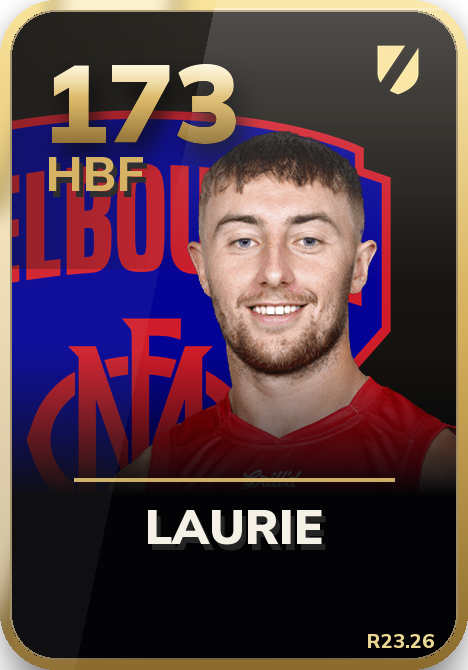
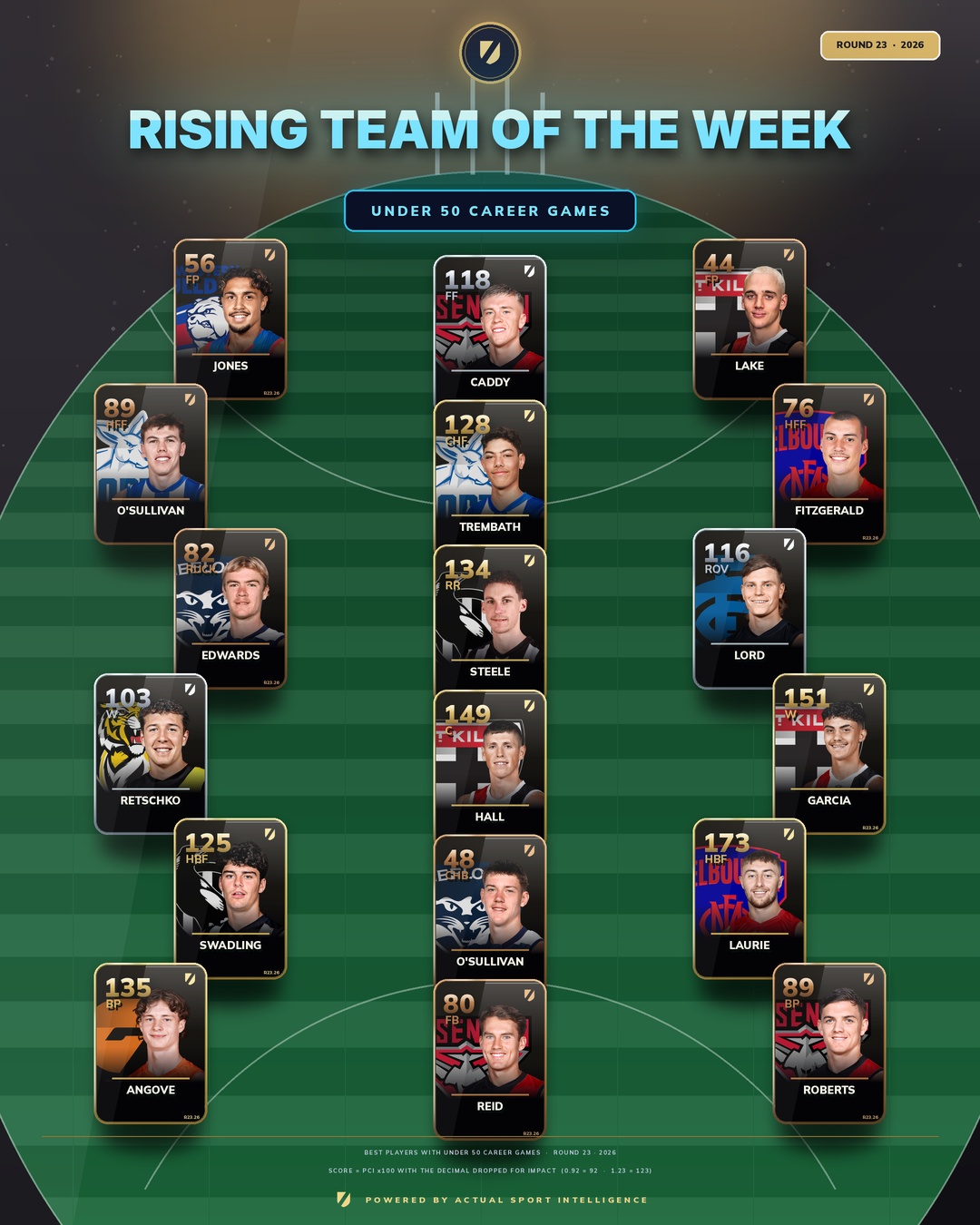
Bailey Laurie posted a contribution rating of 173 across half-back for Melbourne. That figure isn't scored on a gentler scale for kids — it's the same one that measures the 300-gamers. On that scale, in his position, it was one of the best defensive games anyone played this weekend, senior or not. And Laurie is 27 games in. That matters: past that mark, a number this big stops reading as a day someone caught and starts reading as who they've become. He's not on the way any more. He's arrived.
The deeper find is where the strength sits. Rising-star talk always lives up forward and in the middle, so when young players excel in defence it slides past unnoticed. Yet the best game on the whole sheet is a defender's, and Laurie isn't the only back standing tall — Cody Angove posted near 135 just five games into his career, and Sam Swadling added 125. That's the tell, because defence is the hardest place in football to look good early. There's no ball-winning to hide behind; it's pure judgment. A young back line producing like this in the same week is not a cute story — it's a genuinely strong back half.
There's a club story sitting underneath the individual one, too. Name by name, St Kilda have several kids in or near this eighteen. Read them as a group and something else appears: Max Hall through the middle at 149 and Hugo Garcia on the wing at 151, both at elite numbers, in the exact part of the ground you build a team from. Two-thirds of a young spine, forming through the corridor at once. And it isn't only the flashy green ones — Essendon's Nate Caddy (118), across the 40-plus-game bracket, is the more durable kind: output that's already survived a lot of football.
Here's what the numbers can't do, and it's worth saying plainly. Big contribution ratings reward players who see a lot of the ball, so a ball-winning half-back will always read louder than a defender whose whole job is to lock a dangerous forward out of the game and never touch it. That means Connor O'Sullivan and Zach Reid — doing hard, quiet jobs superbly — sit lower on the sheet than the size of their afternoon deserves. Every one of these eighteen was the best in their position this round. None of them is a foil for anyone else.
One honest limit: this is a single week, with no run of form behind it, so nobody here can tell you whether this crop is rising, cresting or holding — only what they produced right now. What the evidence carries is clear enough. The best young game this round was a defender's, the group's real strength is in the back half, and Laurie's number has crossed a line that a rising-player column isn't built to measure. Whether that means he should stop being judged against the kids at all — that one's yours to weigh.
Who ran out of jumpers
The measure of how big the round was isn't the eighteen who made it — it's the players who produced genuine Team-of-the-Week football and still missed.
 Matthew Jefferson Melbourne142
- Harvey Langford Melbourne118
 Conor Stone GWS GIANTS117
 Zac Banch North Melbourne116
 Jay Polkinghorne Geelong Cats112
 Tobie Travaglia St Kilda111
The rising sheet this week isn't a nursery — it's a back half. Bailey Laurie's 173 at half-back for Melbourne, 27 games into his career, isn't a young-player number at all: on the same scale that measures every senior in the competition, it was one of the best defensive games anyone played this round. And he isn't alone down there.