The Best Ruck Argument Has Three Right Answers
Luke Jackson, Max Gawn and Brodie Grundy all own a version of 2026's ruck crown. The room works out why the answer keeps moving.
There's no cleaner pub argument in footy than 'best ruck', and 2026 has made it worse — three genuine cases, three different jobs. We put the field in front of the room: what the numbers carry, what they can't settle, and why the answer shifts depending on what you actually value in a ruckman.
Also in this story
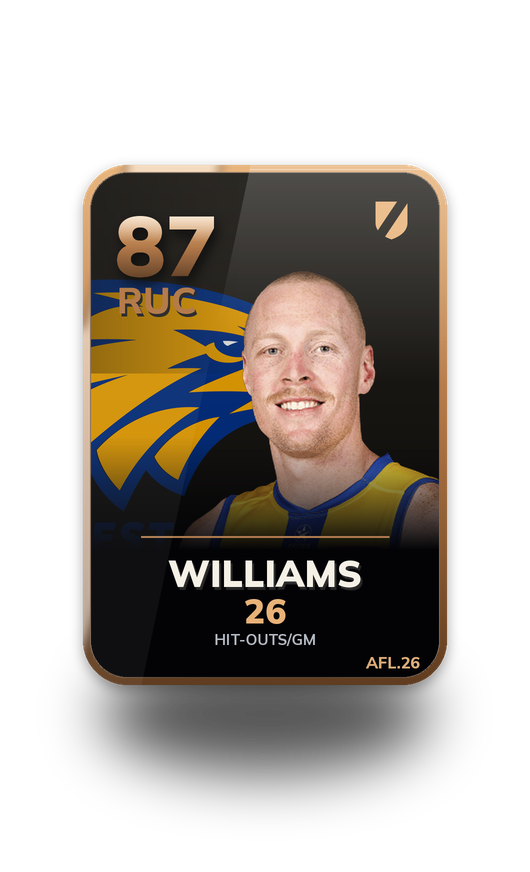
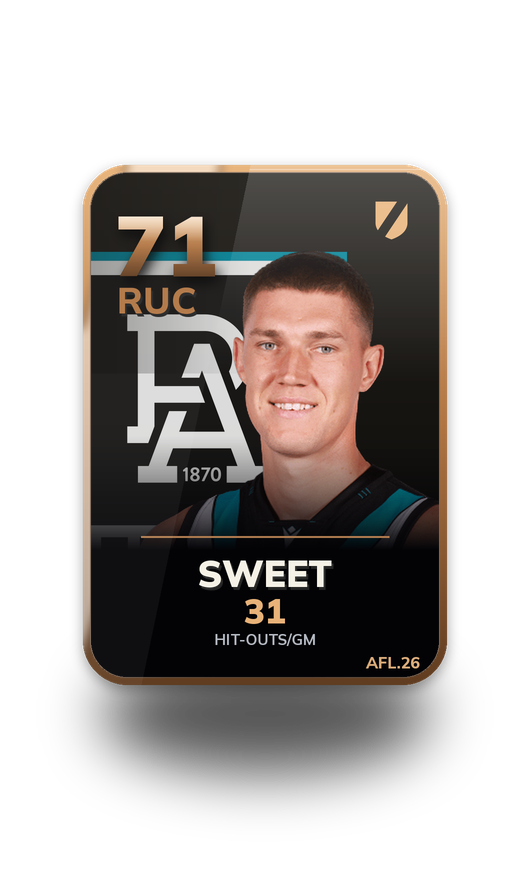
Watch these blokes and you're not watching one role, you're watching three. Brodie Grundy is a volume machine — about 35 taps a game into a monster 75 ruck contests. He turns up to everything and hits it. Max Gawn sits just under that, roughly 32 taps into 65 contests, and he's clean at the coalface with 6.5 clearances of his own.
Then there's Luke Jackson, who plays the game differently again. Only about 25 hit-outs into 57 contests — the lowest workload of the pack — yet the engine rates him the most decisive single-game influence of any ruck this year. That tells you Jackson's value isn't in the tap count. It's what he does once the ball's live and he's running around the ground.
So the football doesn't hand you one winner. It hands you a question: do you want the bloke who wins the most contests, or the bloke who tilts the game most when he's on?
Let's be careful about what the numbers actually let us say. On raw volume, Grundy leads — about 35 hit-outs into 75 contests. Gawn is next on taps. On clearances the ruck wins himself, Gawn's 6.5 edges Xerri's 6.4 and Grundy's 6.2. Those are clean, comparable rankings.
Where it gets slippery is the word 'best'. The engine names Jackson its most decisive ruck on a single-game influence measure, with Gawn and Grundy nearest. That's one model's read of impact, not an undisputed fact — and Jackson gets there on the smallest workload, which is either efficiency or a smaller sample of involvement depending on how you frame it.
So I won't pretend the data settles it. It gives us three defensible answers built on three different metrics. What it can't do is tell you which metric matters most. That call sits with you, not the spreadsheet.
It feels fresh because we love a settled hierarchy, and right now there isn't one. But step back and a genuinely open ruck title is closer to footy's default than we admit. Dominant single-ruck eras are the exception; usually two or three big men are trading the mantle depending on the week.
What's worth marking against the standard is the shape of these seasons. Grundy attending 75 ruck contests a game is heavy lifting by any measure of a lead ruck's workload. Gawn clearing the ball 6.5 times himself is elite territory for the position — that's a ruck functioning like a midfielder.
So don't mistake 'no clear number one' for something unusual. The unusual thing would be one ruck lapping the field. What we've got is a strong field bunched at the top, which is exactly what a healthy position looks like.
This is where it gets human. Grundy's numbers grab you — 35 taps, 75 contests, the busiest ruck in the game. That volume writes the headline. But volume and impact aren't the same thing, and the engine's read is that Jackson tilts matches more while doing measurably less of the grunt work.
That's the player-truth split. Jackson at about 25 hit-outs and 57 contests isn't out-working anyone — he's out-influencing them, presumably with his run, his marking and what he does as a genuine third option around the ground. Gawn is the balanced one: heavy workload and 6.5 clearances himself, so he's carrying both the labour and the impact.
And spare a thought for Xerri — 6.4 clearances of his own off just 21 taps. Quietly one of the most efficient contributors in the field, nowhere near the headline.
Here's my usual worry: are we reading these rucks through their teams' results? Mostly, the workload numbers are clean of that. Hit-outs, contests attended and a ruck's own clearances are things the player does regardless of whether his side won that day. Grundy taps it 35 times whether Sydney gets up or not.
But the soft word is 'decisive'. Influence and impact measures are the ones most easily coloured by outcome — a ruck in a winning side looks like he tilted the game, a ruck in a beaten side looks quiet, even when they did similar things. So I'd hold Jackson's 'most decisive' tag a little more loosely than his 25-tap average.
Ask it plainly: if their teams' results were flipped, would we still call Jackson the game-tilter and Grundy the volume guy? The tap counts wouldn't move. The impact ranking might.
Let me push hard against the emerging warm feeling that Jackson is quietly the best. On the things a ruck is literally there to do — win the tap, attend contests — he's last of this group. About 25 hit-outs into 57 contests. Grundy does 40 more contests a game. That's not a rounding error, that's a different level of physical contribution.
The whole Jackson argument rests on a single engine measure calling him 'most decisive'. Strip that one line out and what's left? The least busy ruck in the field. If you're crowning a ruckman on impact that shows up nowhere in his tap or contest numbers, you're trusting the model over the position's core duties.
And Gawn quietly dismantles the romance anyway: near-top volume AND the best clearance-winning of the lot. If you want one man doing everything, the honest case might be his, not Jackson's.
Underneath the three-way argument is one shift worth naming. We used to answer 'best ruck' by counting hit-outs. This field breaks that habit. The bloke the engine rates most decisive, Jackson, has the fewest taps. The bloke with the most taps, Grundy, isn't the one the model leans toward. The definition has moved out from under the word.
That's the central contradiction the room keeps circling. Grundy owns the traditional answer — volume, contests, presence. Jackson owns the modern one — influence per involvement, ruck-as-athlete. Gawn sits on the fault line, doing enough of both that he refuses to be dismissed by either camp.
So the headline shouldn't be 'who's the best ruck'. It should be 'what do we now mean by best ruck' — because 2026 is a year where the question changed and the answer followed it.
What the room agrees on
Everyone accepts the field is genuinely close and genuinely different. Grundy is the volume king — about 35 hit-outs into a huge 75 ruck contests. Gawn is the most complete on paper, pairing near-top workload with 6.5 clearances he wins himself. Jackson does the least grunt work — around 25 taps into 57 contests — yet the engine rates him the most decisive single-game influence of any ruck this season, with Gawn and Grundy nearest. Nobody in the room disputes those numbers.
Where the room still has tension
The split is over what 'best' should reward. Nair and Marsh warn that Jackson's crown rests on one impact measure while he trails the field on the core ruck duties, and Webb notes impact ratings are the numbers most easily coloured by team results. Hartley, Morrison and Chen counter that volume was never the same as value, and that Jackson tilting games on the smallest workload is the more interesting truth. That tension isn't a flaw here — it IS the topic.
What the evidence carries
What survives all seven seats is this: there is no single best ruck in 2026, there are three correct answers to three different questions. Want the most contests won and the biggest physical presence? Grundy. Want one man carrying both workload and clearance impact? Gawn. Want the most game-tilting influence per involvement? Jackson, if you trust the engine's read.
What the evidence cannot settle is which of those questions matters most — because that's a value, not a stat. And the one soft spot to keep in mind is that Jackson's 'most decisive' tag comes from a model of impact, not from a tap count, so it deserves a lighter grip than the workload numbers.
The numbers give you the field, cleanly. What they can't do is tell you what you personally want a ruckman to be. The rest is yours to weigh.
Why it matters — Crowning a 'best ruck' quietly commits you to a definition of the position — and 2026 is the year that definition split three ways.